
Piece
Unknown Artist
18th–19th century
Medium
Silk
Dimensions
4 1/2 x 8 1/4 in. (11.43 x 20.95 cm)
Classification
Textiles-Woven
Culture & Period
Japan · Edo (1615–1868) or Meiji period (1868–1912)
Department
Asian Art
Museum
Metropolitan Museum of Art, New York, NY
Credit
Gift of Mr. and Mrs. H. O. Havemeyer, 1896
Accession Number
96.14.707
Rights
Public Domain
Tags
Art Historical Context
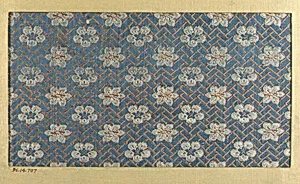
This exquisite silk textile fragment, woven in Japan during the 18th or 19th century, captures the refined artistry of the Edo (1615–1868) or early Meiji (1868–1912) period. Measuring just 4½ x 8¼ inches, this small "Piece" likely served as part of a larger garment, accessory, or decorative panel, adorned with delicate floral motifs—a hallmark of Japanese design that celebrates nature's fleeting beauty. Silk, prized for its luster and durability, was a luxury material in Japan, often reserved for samurai robes, kimonos, or ceremonial items, showcasing the weaver's mastery in creating intricate patterns through complex looms. Woven textiles like this exemplify Japan's longstanding tradition of kasuri or figured silk weaving, where threads are pre-dyed or manipulated to produce vibrant, textured designs without additional embroidery. During the Edo era, such pieces reflected ukiyo-e influences, emphasizing harmony with the seasons through flowers symbolizing renewal and impermanence (mono no aware). As Japan opened to the West in the Meiji period, these crafts persisted amid modernization, blending tradition with innovation. Generously gifted to The Metropolitan Museum of Art in 1896 by Mr. and Mrs. H. O. Havemeyer, renowned collectors of Asian art, this fragment invites us to appreciate the anonymous artisan's skill and the enduring cultural reverence for silk as a canvas for poetic expression.