
Piece
Unknown Artist
18th–19th century
Medium
Silk
Dimensions
6 x 2 in. (15.24 x 5.08 cm)
Classification
Textiles-Woven
Culture & Period
Japan · Edo (1615–1868) or Meiji period (1868–1912)
Department
Asian Art
Museum
Metropolitan Museum of Art, New York, NY
Credit
Gift of Mr. and Mrs. H. O. Havemeyer, 1896
Accession Number
96.14.724
Rights
Public Domain
Tags
Art Historical Context
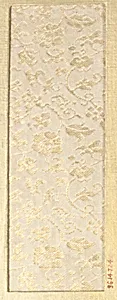
This delicate silk textile fragment, titled simply *Piece*, hails from Japan during the 18th–19th, spanning the late Edo period (1615–1868) or early Meiji era (1868–1912). Measuring just 6 x 2 inches, it exemplifies the exquisite finesse of Japanese woven textiles, likely a remnant from a garment, obi sash, or decorative accessory. Its motif of leaves—evident in the design—reflects the Japanese reverence for nature, a recurring theme in art that symbolizes seasonal change, renewal, and harmony with the natural world. Crafted by an unknown artist, the piece showcases advanced weaving techniques typical of Japan's textile tradition. Silk, prized for its luster and durability, was woven on specialized looms, often employing intricate patterns created through dobby or jacquard-like methods to render detailed foliage. During the Edo period's era of peace and prosperity, such textiles flourished among merchants and samurai classes, blending functionality with artistry. The Meiji transition introduced Western influences, yet preserved these masterful crafts. Generously gifted to the Metropolitan Museum of Art in 1896 by Mr. and Mrs. H. O. Havemeyer, renowned collectors of Asian art, this small treasure invites visitors to appreciate the subtlety of Japanese design—where every thread tells a story of cultural elegance and impermanence.