
Piece
Unknown Artist
18th–19th century
Medium
Silk
Dimensions
12 1/2 x 4 1/4 in. (31.75 x 10.80 cm)
Classification
Textiles-Woven
Culture
Japan
Department
Asian Art
Museum
Metropolitan Museum of Art, New York, NY
Credit
Gift of Mr. and Mrs. H. O. Havemeyer, 1896
Accession Number
96.14.754
Rights
Public Domain
Art Historical Context
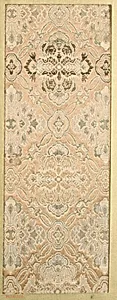
This delicate silk textile fragment, simply titled *Piece*, hails from Japan during the 18th–19th centuries—a time when the country’s weaving traditions flourished amid the Edo period’s cultural refinement and the dawn of Meiji modernization. Measuring just 12½ × 4¼ inches (31.75 × 10.80 cm), its modest scale suggests it may be a sample or remnant from a larger garment or accessory, showcasing the precision of Japanese artisans who transformed raw silk into luxurious fabrics. Woven silk held profound cultural importance in Japan, symbolizing status and artistry. Weavers employed sophisticated loom techniques to create intricate patterns and textures, often drawing from nature, seasons, or folklore motifs—hallmarks of the era’s textile innovation. Prized for its luster and durability, silk was essential for kimonos, obi sashes, and ceremonial wear, reflecting Japan’s mastery of sericulture and dyeing processes passed down through generations. Generously gifted to the Metropolitan Museum of Art in 1896 by Mr. and Mrs. H. O. Havemeyer, renowned collectors of Asian art, this piece joins the museum’s rich Asian Art holdings. It invites us to appreciate the anonymous skill of its creator, a testament to Japan’s enduring legacy in textile arts.