
Piece
Unknown Artist
18th–19th century
Medium
Silk
Dimensions
5 x 7 1/2 in. (12.70 x 19.05 cm)
Classification
Textiles-Woven
Culture
Japan
Department
Asian Art
Museum
Metropolitan Museum of Art, New York, NY
Credit
Gift of Mr. and Mrs. H. O. Havemeyer, 1896
Accession Number
96.14.755
Rights
Public Domain
Tags
Art Historical Context
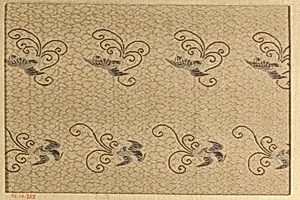
This delicate silk textile fragment, titled simply *Piece*, hails from Japan during the 18th–19th centuries, a period spanning the late Edo era and early Meiji period. Measuring just 5 x 7½ inches, it exemplifies the exquisite finesse of Japanese woven textiles, crafted by an unknown artist. The motif of birds—evident from its tags—likely celebrates nature's vitality, a recurring theme in Japanese art symbolizing harmony, seasons, and auspicious omens. Woven silk was a pinnacle of craftsmanship in Japan, where sericulture (silk production) flourished, enabling intricate patterns through techniques like jacquard-style looms or supplementary wefts. This small-scale piece may have been part of a larger garment, obi sash, or decorative panel, showcasing the era's mastery of luxurious, lightweight fabrics prized by samurai, merchants, and nobility alike. Its vibrant dyes and precise weave reflect the cultural reverence for textiles as wearable art. Generously gifted to the Metropolitan Museum of Art in 1896 by Mr. and Mrs. H. O. Havemeyer, renowned collectors of Asian treasures, this artwork invites visitors to marvel at Japan's textile legacy. Though modest in size, it whispers stories of artistry preserved across centuries, bridging everyday elegance with profound aesthetic tradition.