
Piece
Unknown Artist
18th–19th century
Medium
Silk
Dimensions
11 3/4 x 7 1/2 in. (29.84 x 19.05 cm)
Classification
Textiles-Woven
Culture
Japan
Department
Asian Art
Museum
Metropolitan Museum of Art, New York, NY
Credit
Gift of Mr. and Mrs. H. O. Havemeyer, 1896
Accession Number
96.14.756
Rights
Public Domain
Tags
Art Historical Context
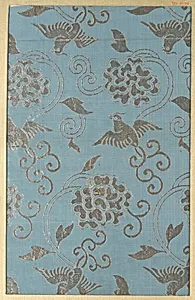
This exquisite silk textile fragment, titled simply *Piece*, hails from Japan during the 18th–19th centuries, a time spanning the opulent Edo period and the transformative early Meiji era. Woven with masterful precision, it measures a modest 11¾ x 7½ inches, likely part of a larger garment or decorative panel. Its floral motifs, rendered in vibrant silk threads, capture the delicate beauty of nature—a hallmark of Japanese artistry that evokes seasonal blooms and impermanence, central themes in the country's aesthetic philosophy. Japanese woven silks like this one showcase advanced textile techniques developed over centuries, where artisans employed intricate looms to interlace dyed yarns, creating patterns without additional embroidery. Silk, prized for its luster and durability, was a luxury material integral to kimonos, obi sashes, and ceremonial robes, reflecting social status and craftsmanship guilds. Though the artist remains unknown, such pieces highlight the anonymous mastery of regional workshops, often in areas like Nishijin in Kyoto. Generously gifted to the Metropolitan Museum of Art in 1896 by Mr. and Mrs. H. O. Havemeyer, renowned collectors of Asian art, this fragment offers a window into Japan's rich textile heritage. Visitors can appreciate how these woven flowers not only adorned the elite but also embodied wabi-sabi elegance—subtle, timeless, and profoundly poetic.