
Piece
Unknown Artist
18th–19th century
Medium
Silk
Dimensions
4 3/4 x 6 1/4 in. (12.07 x 15.88 cm)
Classification
Textiles-Woven
Culture
Japan
Department
Asian Art
Museum
Metropolitan Museum of Art, New York, NY
Credit
Gift of Mr. and Mrs. H. O. Havemeyer, 1896
Accession Number
96.14.812
Rights
Public Domain
Art Historical Context
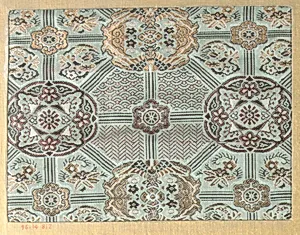
This delicate silk textile fragment, titled simply *Piece*, hails from Japan during the 18th19th centuries, a time when the country bridged the artistic traditions of the Edo period the modernizing Meiji era. Measuring just 4¾ x 6¼ inches (12.07 x 15.88 cm), it exemplifies the exquisite craftsmanship of Japanese woven textiles, which were essential to daily life, fashion, and. Donated to the Metropolitan Museum of Art 1896 by collectors Mr. and Mrs. H. O. Havemeyer, it now resides in the Asian Art department, highlighting early Western fascination with Japanese aesthetics. As a woven silk piece, it showcases the mastery of Japan's textile artisans, who employed sophisticated looms to create fine, lustrous fabrics prized for kimonos, obi sashes, and decorative screens. Silk production was a cornerstone of Japan's economy, with regions like Nishijin in Kyoto renowned for intricate patterns achieved through complex weaving techniques. Though the specific design remains unrecorded here, such fragments often preserved motifs inspired by nature, seasons, or folklore, reflecting the era's emphasis on harmony and impermanence (mono no aware). This modest yet remarkable artifact invites us to appreciate the subtlety of Japanese textile art—where thread by thread, artisans wove beauty and cultural identity into portable treasures. A testament to enduring tradition amid societal change.