
Piece
Unknown Artist
18th–19th century
Medium
Silk
Dimensions
4 1/4 x 6 1/4 in. (10.80 x 15.88 cm)
Classification
Textiles-Woven
Culture
Japan
Department
Asian Art
Museum
Metropolitan Museum of Art, New York, NY
Credit
Gift of Mr. and Mrs. H. O. Havemeyer, 1896
Accession Number
96.14.819
Rights
Public Domain
Tags
Art Historical Context
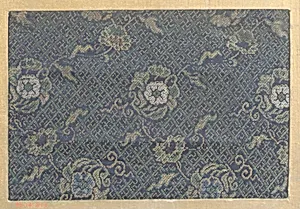
This delicate silk fragment, simply titled *Piece*, originates from Japan in the 18th–19th centuries and exemplifies the refined artistry of woven textiles. Measuring a modest 4¼ x 6¼ inches (10.80 x 15.88 cm), it to the Metropolitan Museum of Art's Asian department, classified as a woven textile adorned with floral motifs. These small-scale pieces were often cherished samples or remnants of larger fabrics, highlighting Japan's longstanding mastery of silk production and weaving techniques. Silk, prized for its luster and durability, held immense cultural value in Japan during this era, spanning the late Edo period into early Meiji times. Weavers employed intricate looms to create patterns like these blooming flowers, which evoked nature's beauty and seasonal harmony—a recurring theme in Japanese design. The tactile elegance of woven silk not only served practical purposes in garments and furnishings but also embodied aesthetic ideals of subtlety and precision. Generously gifted to the Museum by Mr. and Mrs. H. O. Havemeyer in 1896, this artwork reflects growing Western fascination with Japanese crafts at the turn of the century. Visitors can appreciate how such textiles bridged everyday utility with profound artistic expression.