
Piece
Unknown Artist
18th–19th century
Medium
Silk
Dimensions
7 x 7 1/2 in. (17.78 x 19.05 cm)
Classification
Textiles-Woven
Culture
Japan
Department
Asian Art
Museum
Metropolitan Museum of Art, New York, NY
Credit
Gift of Mr. and Mrs. H. O. Havemeyer, 1896
Accession Number
96.14.851
Rights
Public Domain
Tags
Art Historical Context
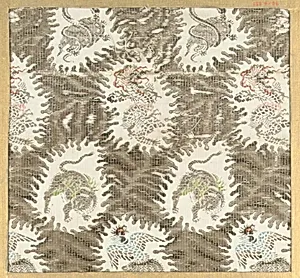
This exquisite silk textile fragment, titled simply *Piece*, hails from Japan during the 18th–19th, a time when the country’s weaving traditions flourished amid the Edo period’s prosperity and the dawn of Meiji-era modernization. Measuring just 7 x 7½ inches, this small woven square likely served as a sample, panel, or part of a larger garment like a kimono or obi sash. Its delicate silk medium showcases Japan’s mastery of sericulture and loom techniques, where fine threads were interlaced to create intricate patterns, often featuring animals symbolizing longevity, prosperity, or the natural world—think graceful birds, mythical creatures, or seasonal fauna. In Japanese culture, textiles were more than fabric; they embodied artistry, status, and storytelling. Woven silks like this one highlighted regional specialties, such as Nishijin brocades from Kyoto, blending functionality with aesthetic refinement. Donated to The Metropolitan Museum of Art in 1896 by collectors Mr. and Mrs. H. O. Havemeyer, it reflects early Western fascination with Asian arts during the Japonisme craze. Today, in the Asian Art department, it invites us to appreciate the anonymous artisan’s skill, preserving a glimpse of Japan’s textile heritage for modern eyes.