
Piece
Unknown Artist
18th–19th century
Medium
Silk
Dimensions
5 1/2 x 8 1/2 in. (13.97 x 21.59 cm)
Classification
Textiles-Woven
Culture
Japan
Department
Asian Art
Museum
Metropolitan Museum of Art, New York, NY
Credit
Gift of Mr. and Mrs. H. O. Havemeyer, 1896
Accession Number
96.14.864
Rights
Public Domain
Tags
Art Historical Context
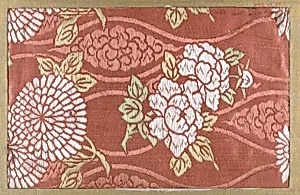
This delicate silk textile fragment, titled simply *Piece*, hails from Japan during the 18th–19th centuries, a time when Edo-period craftsmanship flourished into the early Meiji era. Measuring just 5½ x 8½ inches, it exemplifies the exquisite finesse of Japanese woven textiles, likely a remnant from a larger garment like a kimono obi sash. Adorned with floral motifs—evident from its tags—the piece captures the Japanese reverence for nature's fleeting beauty, where flowers often symbolized seasons, renewal, and harmony. Woven silk was a pinnacle of artisanal skill in Japan, with regions like Nishijin in Kyoto renowned for intricate patterns created through complex looms and resist-dyeing techniques. Silk's luster and durability made it ideal for luxurious clothing, reflecting social status and aesthetic ideals of wabi-sabi—embracing imperfection and transience. Though the artist remains unknown, such works highlight the anonymous mastery of textile workshops, where generations honed techniques passed down through guilds. Generously gifted to the Metropolitan Museum of Art in 1896 by Mr. and Mrs. H. O. Havemeyer, prominent collectors of Asian art, this piece invites us to appreciate the tactile poetry of silk. Up close, its subtle sheen and woven blooms transport visitors to a world where every thread tells a story of cultural elegance and enduring tradition.