
Piece
Unknown Artist
18th–19th century
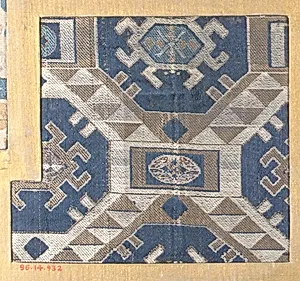
Medium
Silk
Dimensions
4 3/4 x 5 1/4 in. (12.07 x 13.34 cm)
Classification
Textiles-Woven
Culture
Japan
Department
Asian Art
Museum
Metropolitan Museum of Art, New York, NY
Credit
Gift of Mr. and Mrs. H. O. Havemeyer, 1896
Accession Number
96.14.932
Rights
Public Domain
Art Historical Context
This delicate silk textile fragment, titled simply *Piece*, hails from Japan during the 18th19th centuries, a golden era of Edo-period craftsmanship when weaving reached extraordinary heights of refinement. Produced by an unknown artist, this small woven square—measuring just 4¾ x 5¼ inches—exemplifies the meticulous artistry of Japanese textile production. Silk, prized for its luster and durability, was a staple in garments like kimonos and obi sashes, often featuring intricate patterns drawn from nature, seasons, or auspicious motifs that reflected Japan's deep cultural reverence for harmony and impermanence. Woven textiles like this one highlight advanced techniques such as tabby or twill structures, where warp and weft threads interlace to create subtle textures and sheen. In Japanese culture, such fabrics were not mere decoration but symbols of status, artistry, and even philosophical ideals, traded along vibrant merchant routes and worn during festivals or ceremonies. Though details of its exact design remain unrecorded here, its survival speaks to the enduring appeal of these works. Acquired as a gift from collectors Mr. and Mrs. H. O. Havemeyer in 1896, this piece now graces the Metropolitan Museum of Art's Asian Art department. It invites visitors to appreciate the quiet elegance of everyday luxury from Japan's past, a testament to artisans whose skill wove beauty into the fabric of history.