
Piece
Unknown Artist
18th–19th century
Medium
Silk
Dimensions
2 1/4 x 5 1/2 in. (5.71 x 13.97 cm)
Classification
Textiles-Woven
Culture
Japan
Department
Asian Art
Museum
Metropolitan Museum of Art, New York, NY
Credit
Gift of Mr. and Mrs. H. O. Havemeyer, 1896
Accession Number
96.14.939
Rights
Public Domain
Art Historical Context
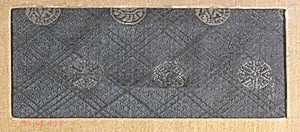
This exquisite silk fragment, titled simply *Piece*, hails from Japan during the 18th–19th, a time when the country’s textile arts flourished under the Edo period’s refined craftsmanship and into the early Meiji era Measuring just 2¼ x 5½ inches (5.71 x 13.97 cm), this woven textile exemplifies the precision of Japanese silk weaving, likely produced in renowned centers like Kyoto or Nishijin. Silk, prized for its luster and durability, was a cornerstone of Japanese culture, adorning kimonos, obi sashes, and ceremonial garments that reflected social status and seasonal motifs. Woven textiles like this one highlight innovative techniques such as jacquard-like patterning or supplementary wefts, which allowed artisans to create intricate designs without dyes alone. Though the artist remains unknown, such pieces underscore Japan’s mastery of kasuri (ikat) or figured brocades, blending functionality with artistry. Donated to the Metropolitan Museum of Art in 1896 by Mr. and Mrs. H. O. Havemeyer—avid collectors of Asian treasures—this fragment offers a glimpse into everyday luxury and the global appeal of Japanese exports during a period of increasing Western fascination with Japonisme. Today, it invites visitors to appreciate the tactile elegance of silk up close, a testament to centuries-old traditions preserved in the Asian Art department.