
Piece
Unknown Artist
18th–19th century
Medium
Silk
Dimensions
2 1/4 x 5 1/2 in. (5.71 x 13.97 cm)
Classification
Textiles-Woven
Culture
Japan
Department
Asian Art
Museum
Metropolitan Museum of Art, New York, NY
Credit
Gift of Mr. and Mrs. H. O. Havemeyer, 1896
Accession Number
96.14.947
Rights
Public Domain
Tags
Art Historical Context
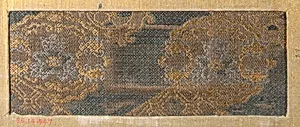
This delicate silk textile fragment, titled simply *Piece*, hails from Japan during the 18th19th centuries, a time when Edo-period artisans elevated weaving into a fine art form. Measuring just 2¼ x 5½ inches, its petite scale suggests it may be a or remnant from a larger, such as a kimono obi sash. Woven with exquisite precision, the fabric showcases floral motifs—a hallmark of Japanese design symbolizing nature's beauty, seasons, and fleeting impermanence (mono no aware). Silk weaving in Japan was a labor-intensive craft mastered by specialized guilds, often using techniques like kasuri (ikat) or supplementary weft patterning to create vibrant, textured effects. Though the artist remains unknown, the work reflects the era's technical virtuosity and aesthetic refinement, where textiles were not mere cloth but wearable poetry. Flowers, rendered in subtle threads, evoke the cherry blossoms or irises celebrated in ukiyo-e prints and poetry. Generously gifted to the Metropolitan Museum of Art in 1896 by Mr. and Mrs. H. O. Havemeyer, prominent collectors of Asian treasures, this piece invites us to marvel at Japan's textile legacy—bridging everyday elegance with profound cultural artistry.