
Piece
Unknown Artist
18th–19th century
Medium
Silk
Dimensions
5 x 2 in. (12.70 x 5.08 cm)
Classification
Textiles-Woven
Culture
Japan
Department
Asian Art
Museum
Metropolitan Museum of Art, New York, NY
Credit
Gift of Mr. and Mrs. H. O. Havemeyer, 1896
Accession Number
96.14.975
Rights
Public Domain
Tags
Art Historical Context
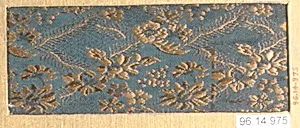
This delicate silk fragment, titled simply *Piece*, hails from Japan during the 18th–19th centuries, a time when Edo-period craftsmanship flourished into the early Meiji era. Measuring just 5 x 2 inches, this woven textile exemplifies the exquisite finesse of Japanese silk production, likely intended as part of a larger garment like a kimono or obi sash. Its floral motifs—evident from the tagged "Flowers" theme—reflect Japan's deep reverence for nature, where blossoms symbolize seasonal beauty, transience, and harmony with the seasons. Woven silk was a pinnacle of artisanal skill in Japan, requiring mastery of looms to create intricate patterns through techniques like weft or warp ikat, though specifics here remain unknown. These textiles were not mere fabric but cultural artifacts, worn during festivals or by the elite, blending utility with poetic artistry. The vibrant dyes and tight weave preserved in this small piece highlight the enduring legacy of Japan's textile tradition, prized worldwide. Acquired as a gift from Mr. and Mrs. H. O. Havemeyer in 1896, it entered the Metropolitan Museum of Art's Asian Art collection early on, underscoring the Havemeyers' passion for global treasures. Today, it invites visitors to appreciate the quiet elegance of overlooked fragments that whisper stories of distant workshops and blooming gardens.