
Piece
Unknown Artist
18th–19th century
Medium
Silk
Dimensions
5 1/4 x 3 in. (13.34 x 7.62 cm)
Classification
Textiles-Woven
Culture
Japan
Department
Asian Art
Museum
Metropolitan Museum of Art, New York, NY
Credit
Gift of Mr. and Mrs. H. O. Havemeyer, 1896
Accession Number
96.14.976
Rights
Public Domain
Art Historical Context
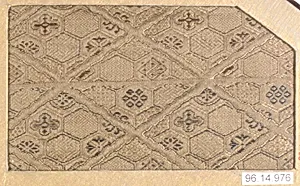
This delicate silk textile fragment, simply titled *Piece*, hails from Japan during the 18th–19th centuries, a time spanning the opulent Edo period and the transformative early Meiji era. Measuring just 5¼ x 3 inches, it exemplifies the exquisite craftsmanship of Japanese weaving traditions, where silk was prized for its luster and versatility in garments like kimonos and obi sashes. As a woven textile, it likely showcases intricate loom techniques honed by skilled artisans in regions renowned for silk production, such as Kyoto's Nishijin district. The medium of silk underscores its cultural prestige—Japan was a global leader in sericulture, transforming raw cocoons into luxurious fabrics that symbolized status and artistry. These pieces often featured subtle patterns or textures achieved through complex treadling and weft patterning, reflecting a harmony of utility and aesthetic refinement central to Japanese design philosophy. Acquired as a gift from Mr. and Mrs. H. O. Havemeyer in 1896 and now housed in the Metropolitan Museum of Art's Asian Art Department, this modest yet masterful fragment invites visitors to appreciate the unsung heroes of textile history: anonymous weavers whose innovations influenced global fashion and continue to inspire contemporary designers.