
Piece
Unknown Artist
18th–19th century
Medium
Silk
Dimensions
2 1/4 x 1 1/4 in. (5.71 x 3.17 cm)
Classification
Textiles-Woven
Culture
Japan
Department
Asian Art
Museum
Metropolitan Museum of Art, New York, NY
Credit
Gift of Mr. and Mrs. H. O. Havemeyer, 1896
Accession Number
96.14.988
Rights
Public Domain
Art Historical Context
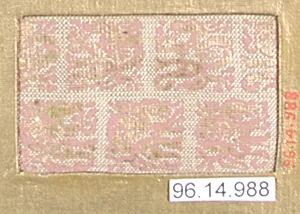
This exquisite silk fragment, titled simply *Piece*, hails from Japan during the 18th–19th centuries, a time when the nation’s textile arts flourished under the Edo and early Meiji periods. Measuring just 2¼ x 1¼ inches, this diminutive woven textile exemplifies the and finesse of Japanese craftsmanship. Donated to the Metropolitan Museum of Art in 1896 by Mr. and Mrs. H. O. Havemeyer, it entered one of the earliest Western collections of Asian art, reflecting the growing fascination with Japonisme among collectors. As a woven silk textile, it showcases the advanced looms and dyeing techniques that made Japan a global leader in sericulture—the cultivation of silkworms for silk production. Such small pieces were often fragments from larger garments like kimonos or obi sashes, or even pattern samples traded internationally. Silk’s luster and durability symbolized luxury and status in Japanese culture, where weaving guilds preserved intricate patterns passed down through generations. Today, this unassuming yet remarkable artifact invites us to appreciate the artistry hidden in everyday elegance. Preserved in the Met’s Asian Art department, it whispers stories of innovation, trade, and timeless beauty from Japan’s vibrant textile heritage.