
Piece
Unknown Artist
18th–19th century
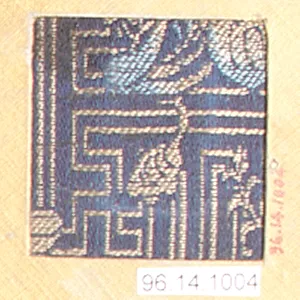
Medium
Silk
Dimensions
2 x 2 in. (5.08 x 5.08 cm)
Classification
Textiles-Woven
Culture
Japan
Department
Asian Art
Museum
Metropolitan Museum of Art, New York, NY
Credit
Gift of Mr. and Mrs. H. O. Havemeyer, 1896
Accession Number
96.14.1004
Rights
Public Domain
Art Historical Context
This exquisite silk textile fragment, a modest 2 x 2 inches, hails from Japan during the 18th–19th centuries, a golden era for the country's renowned weaving traditions. Classified as a woven textile in the Metropolitan Museum of Art's Asian Art Department, it exemplifies the meticulous craftsmanship of Edo-period (1603–1868) and early Meiji artisans. Though the artist remains unknown and the precise design is not specified, such small silk pieces were often fragments from larger garments, screens, or decorative objects, prized for their luxurious sheen and intricate patterns achieved through sophisticated looms. Japanese silk weaving reached artistic heights in this period, with techniques like jacquard-like structures or supplementary wefts creating vibrant motifs inspired by nature, theater, or daily life. Silk, Japan's premier export commodity, symbolized wealth and cultural refinement, powering a thriving trade that connected East Asia to the world. This piece's diminutive scale highlights the precision required—master weavers could produce complex designs in miniature, turning fabric into wearable art. A generous gift from Mr. and Mrs. H. O. Havemeyer in 1896, avid collectors who shaped the Met's Asian holdings, this "Piece" invites us to marvel at Japan's textile legacy. Up close, it whispers stories of hands skilled across centuries, bridging utility and beauty in everyday elegance.