
Piece
Unknown Artist
18th–19th century
Medium
Silk
Dimensions
3 3/4 x 2 1/4 in. (9.53 x 5.71 cm)
Classification
Textiles-Woven
Culture
Japan
Department
Asian Art
Museum
Metropolitan Museum of Art, New York, NY
Credit
Gift of Mr. and Mrs. H. O. Havemeyer, 1896
Accession Number
96.14.1341
Rights
Public Domain
Tags
Art Historical Context
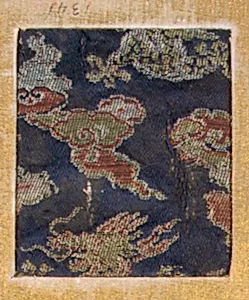
This exquisite silk textile fragment, titled simply *Piece*, hails from Japan during the 18th19th centuries, a time when Edo-period craftsmanship flourished alongside the dawn of the Meiji era modernization. Measuring just 3 3/4 x 2 1/4 inches, this woven treasure likely originated as part of a larger garment,, or ceremonial object, showcasing the meticulous artistry of anonymous Japanese weavers. Donated to the Metropolitan Museum of Art in 6 by collectors Mr. and Mrs. H. O. Havemeyer, it reflects the growing Western fascination with Asian art at the fin de siècle. Dragons, the artwork's defining motif, hold profound cultural significance in Japan, symbolizing imperial power, protection, and the elemental forces of water and storm. Rendered in vibrant silk threads, these mythical creatures exemplify the technical virtuosity of Japanese weaving—employing intricate Jacquard-like patterns or supplementary weft techniques to create dynamic textures and shimmering effects. Silk, prized for its luster and durability, was a luxury material reserved for elite textiles, underscoring social status and aesthetic refinement. Though small, this piece invites us to marvel at Japan's textile heritage, where every thread weaves stories of mythology and mastery into everyday elegance. A true gem of the Asian Art department!