
Piece
Unknown Artist
18th–19th century
Medium
Silk
Dimensions
6 x 2 1/4 in. (15.24 x 5.71 cm)
Classification
Textiles-Woven
Culture
Japan
Department
Asian Art
Museum
Metropolitan Museum of Art, New York, NY
Credit
Gift of Mr. and Mrs. H. O. Havemeyer, 1896
Accession Number
96.14.1348
Rights
Public Domain
Tags
Art Historical Context
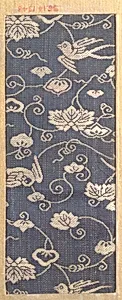
This delicate silk textile fragment, titled *Piece*, hails from Japan during the 18th–19th, a time when Edo-period artisans perfected intricate weaving techniques amid a flourishing culture of nature-inspired designs. Measuring just 6 x 2¼ inches, its small scale suggests it may have been part of a larger garment, such as a kimono sash or accessory, showcasing the precision of Japanese textile craftsmanship. Woven from fine silk, the piece features motifs of leaves, a recurring theme in Japanese art symbolizing seasonal change, renewal, and the ephemeral beauty of nature—core tenets of philosophies like wabi-sabi. The weaving method highlights the technical mastery of the era, where silk threads were dyed and interlaced to create subtle patterns with depth and sheen, often using specialized looms that allowed for complex motifs without embroidery. Acquired as a gift from Mr. and Mrs. H. O. Havemeyer in 1896 and now housed in the Metropolitan Museum of Art's Asian Art Department, this fragment offers a glimpse into Japan's textile heritage, where everyday luxury reflected profound cultural values. Visitors can appreciate how such modest pieces embodied artistic excellence and aesthetic harmony.