
Piece
Unknown Artist
18th–19th century
Medium
Silk
Dimensions
7 x 1 1/4 in. (17.78 x 3.17 cm)
Classification
Textiles-Woven
Culture
Japan
Department
Asian Art
Museum
Metropolitan Museum of Art, New York, NY
Credit
Gift of Mr. and Mrs. H. O. Havemeyer, 1896
Accession Number
96.14.1478
Rights
Public Domain
Tags
Art Historical Context
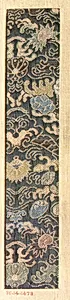
This delicate silk textile fragment, titled simply *Piece*, hails from Japan during the 18th–19th, a time when Edo craftsmanship flourished before transitioning into the Meiji era's modernization. Measuring just 7 x 1¼ inches, its narrow, elongated form suggests it may be a remnant from a garment accessory, such as an obi sash or pouch, where silk weaving reached exquisite heights. The floral motifs, a hallmark tag of this work, evoke Japan's deep appreciation for nature's fleeting beauty—cherry blossoms, irises, or chrysanthemums often symbolizing seasons, transience, and good fortune in daily life and festivals. Crafted through intricate weaving techniques, this piece exemplifies the technical mastery of Japanese textile artisans. Silk threads, prized for their luster and durability, were meticulously interlaced on looms to create vibrant patterns without dyes bleeding, a skill honed in regions like Nishijin or Kyoto. Such textiles were not mere fabric but status symbols, adorning kimono for samurai, merchants, and nobility, blending utility with artistry. Generously gifted to the Metropolitan Museum of Art in 1896 by Mr. and Mrs. H. O. Havemeyer, renowned collectors of Asian treasures, this fragment invites us to marvel at Japan's enduring textile legacy—tiny yet timeless, whispering stories of imperial elegance and natural harmony.