
Piece
Unknown Artist
18th–19th century
Medium
Silk
Dimensions
16 1/2 x 8 1/4 in. (41.91 x 20.95 cm)
Classification
Textiles-Woven
Culture
Japan
Department
Asian Art
Museum
Metropolitan Museum of Art, New York, NY
Credit
Gift of Mr. and Mrs. H. O. Havemeyer, 1896
Accession Number
96.14.1495
Rights
Public Domain
Tags
Art Historical Context
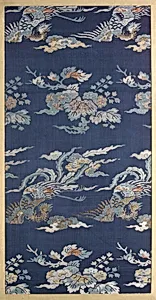
This exquisite silk textile fragment, titled *Piece*, hails from Japan during the 18th19th century, a time when Edo-period artisans mastered intricate weaving techniques to create luxurious fabrics for clothing, screens, and ceremonial objects. Measuring 16½ x 8¼ inches, this woven silk exemplifies the precision of Japanese textile craftsmanship, where fine threads were interlaced on looms to produce durable yet delicate patterns. Donated to the Metropolitan Museum of Art in 1896 by Mr. and Mrs. H. O. Havemeyer—prominent collectors of Asian art—it now resides in the Asian Art department, offering a glimpse into Japan's rich tradition of silk production. The tag "Phoenix" hints at a motif central to Japanese iconography: the mythical ho-o bird, symbolizing rebirth, virtue, and imperial grace. In woven silks like this, such designs were often achieved through supplementary weft techniques, where colored threads formed vivid images against a shimmering ground, blending functionality with artistry. These pieces were prized by samurai, merchants, and nobility, reflecting social status and aesthetic harmony inspired by nature and folklore. As a survivor of centuries, this anonymous work underscores silk's cultural importance in Japan, where it fueled trade along the Silk Road and embodied wabi-sabi beauty—imperfect yet profound. Visitors can appreciate how such textiles wove stories of resilience and elegance into everyday life.