
Piece
Unknown Artist
18th–19th century
Medium
Silk
Dimensions
7 3/4 x 6 3/4 in. (19.68 x 17.15 cm)
Classification
Textiles-Woven
Culture
Japan
Department
Asian Art
Museum
Metropolitan Museum of Art, New York, NY
Credit
Gift of Mr. and Mrs. H. O. Havemeyer, 1896
Accession Number
96.14.1527
Rights
Public Domain
Tags
Art Historical Context
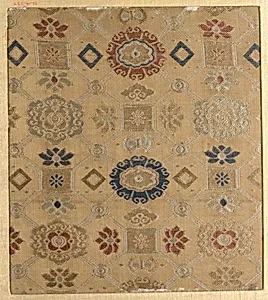
This exquisite silk textile fragment, titled simply *Piece*, hails from Japan during the 18th–19th centuries, a time when Edo-period craftsmanship flourished alongside the dawn of the Meiji era. Measuring just 7¾ x 6¾ inches, it exemplifies the delicate scale of Japanese woven textiles, often used in garments, accessories, or decorative screens. Adorned with floral motifs—likely inspired by seasonal blooms like cherry blossoms or chrysanthemums—the design reflects Japan's profound reverence for nature, where flowers symbolized transience, beauty, and harmony. Crafted in silk, a luxurious fiber prized for its luster and durability, this woven piece showcases advanced textile techniques honed by anonymous artisans. Weaving on silk allowed for intricate patterns through methods like jacquard-like structures or supplementary wefts, creating vivid depth without dyes alone. Such textiles were integral to daily life and courtly fashion, embodying *wabi-sabi* aesthetics—imperfect yet profound beauty. Generously gifted to the Metropolitan Museum of Art in 1896 by Mr. and Mrs. H. O. Havemeyer, renowned collectors of Asian art, this fragment offers a window into Japan's textile legacy. Though its exact use remains a mystery, it invites visitors to appreciate the subtle artistry of the overlooked makers who wove poetry into fabric.