
Piece
Unknown Artist
18th–19th century
Medium
Silk
Dimensions
3 1/4 x 6 3/4 in. (8.26 x 17.15 cm)
Classification
Textiles-Woven
Culture
Japan
Department
Asian Art
Museum
Metropolitan Museum of Art, New York, NY
Credit
Gift of Mr. and Mrs. H. O. Havemeyer, 1896
Accession Number
96.14.1536
Rights
Public Domain
Art Historical Context
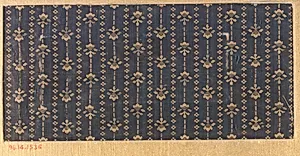
This exquisite silk textile fragment, simply titled *Piece*, hails from Japan during the 18th–19th, a golden era for textile artistry in the Edo and early Meiji periods. Measuring just 3¼ x 6¾ inches, this small woven treasure exemplifies the masterful craftsmanship of Japanese weavers, who transformed fine silk threads into intricate patterns using sophisticated looms. Donated to the Metropolitan Museum of Art 1896 by Mr. and Mrs. H. O. Havemeyer, reflects early Western fascination with Asian arts. Woven silk held profound cultural significance in Japan, often adorning kimonos, obi sashes, or ceremonial garments that conveyed status, season, and artistry. Techniques like supplementary weft weaving or ikat dyeing—common in this period—allowed for vibrant motifs inspired by nature, mythology, or daily life, showcasing the weaver's skill without relying on painting or printing. Though the artist remains unknown, such pieces highlight Japan's guild-based textile traditions, where anonymity underscored collective mastery. Today, this delicate artifact invites us to appreciate the tactile luxury of silk and the enduring legacy of Japanese design, bridging everyday elegance with museum-worthy refinement.