
Piece
Unknown Artist
18th–19th century
Medium
Silk
Dimensions
2 3/4 x 5 in. (6.99 x 12.70 cm)
Classification
Textiles-Woven
Culture
Japan
Department
Asian Art
Museum
Metropolitan Museum of Art, New York, NY
Credit
Gift of Mr. and Mrs. H. O. Havemeyer, 1896
Accession Number
96.14.1554
Rights
Public Domain
Tags
Art Historical Context
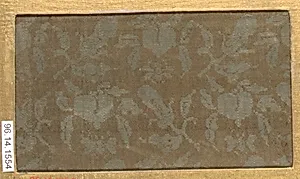
This exquisite silk textile fragment, known simply as *Piece*, hails from Japan during the 18th–19th century, a period spanning the late Edo era and early Meiji restoration. Measuring just 2¾ x 5 inches, its diminutive size suggests it may have been a sample, pouch, or detail from a larger garment like a kimono obi. Woven with delicate floral motifs—evident from its tagging—this piece exemplifies the refined artistry of Japanese textile production, where silk was prized for its luster and durability. Japanese weavers, particularly in regions like Kyoto's Nishijin district, mastered intricate techniques during this time, blending functionality with aesthetic beauty. Flowers in such textiles often symbolized seasonal cycles, prosperity, and natural harmony, reflecting core tenets of Japanese aesthetics like *wabi-sabi* and *mono no aware*. The use of silk underscores its cultural prestige; it was a luxury export and staple of elite fashion, ceremonies, and daily life. Acquired as a gift from Mr. and Mrs. H. O. Havemeyer in 1896, this artifact entered the Metropolitan Museum of Art's Asian Art collection, preserving a glimpse into Japan's textile heritage amid rapid modernization. Though by an unknown artist, its craftsmanship invites visitors to appreciate the anonymous mastery that defined an era.