
Piece
Unknown Artist
18th–19th century
Medium
Silk
Dimensions
3 1/4 x 5 3/4 in. (8.26 x 14.61 cm)
Classification
Textiles-Woven
Culture
Japan
Department
Asian Art
Museum
Metropolitan Museum of Art, New York, NY
Credit
Gift of Mr. and Mrs. H. O. Havemeyer, 1896
Accession Number
96.14.1644
Rights
Public Domain
Art Historical Context
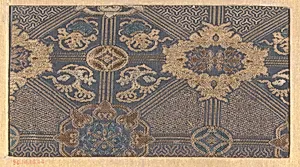
This exquisite silk textile fragment, simply titled *Piece*, hails from Japan during the 18th or 19th century—a time when Edo-period craftsmanship flourished alongside the dawn of the Meiji era Measuring just 3¼ x 5¾ inches, its modest size belies the intricate artistry of Japanese woven textiles, likely a remnant from a larger garment like a kim or obi sash. Donated to the Metropolitan Museum of Art 1896 by collectors Mr. and Mrs. H. O. Havemeyer, it exemplifies the West's growing fascination with Asian arts at the fin de siècle. Crafted in silk on a loom, this piece showcases the technical mastery of Japanese weavers, who employed sophisticated patterning techniques such as ikat or supplementary wefts to create motifs reflecting nature, seasons, or daily life. Silk, prized for its luster and durability, was a luxury material symbolizing status and refined taste in feudal Japan, where textile production supported thriving regional economies like those in Nishijin or Yuzen districts. As part of the Met's Asian Art collection, this woven treasure invites us to appreciate the tactile poetry of fabric—where threads tell stories of tradition, innovation, and cultural elegance that continue to inspire designers today.