
Piece
Unknown Artist
18th–19th century
Medium
Silk
Dimensions
6 x 7 1/4 in. (15.24 x 18.41 cm)
Classification
Textiles-Woven
Culture
Japan
Department
Asian Art
Museum
Metropolitan Museum of Art, New York, NY
Credit
Gift of Mr. and Mrs. H. O. Havemeyer, 1896
Accession Number
96.14.1701
Rights
Public Domain
Tags
Art Historical Context
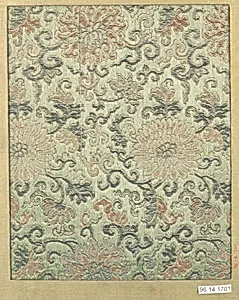
This delicate silk textile fragment, titled simply *Piece*, hails from Japan during the 18th or 19th century, a time when silk weaving reached extraordinary heights of artistry in the Edo and early Me periods. Measuring just 6 x 7¼ inches, it exemplifies the precision of Japanese woven textiles, likely a remnant from a larger garment or decorative object. Floral motifs, as suggested by its tags, bloom across its surface—a nod to Japan's profound reverence for nature, where flowers symbolized seasonal beauty, renewal, and the fleeting essence of life known as *mono no aware*. Crafted in silk, a luxurious fiber central to Japanese export trade and domestic luxury, this piece highlights advanced weaving techniques. Artisans used complex looms to interlace threads into intricate patterns without dyes bleeding, creating vibrant, enduring designs prized by samurai, merchants, and nobility. Such textiles were not mere fabric but cultural treasures, adorning kimonos or obi sashes that conveyed status and artistry. Generously gifted to the Metropolitan Museum of Art in 1896 by Mr. and Mrs. H. O. Havemeyer, renowned collectors of Asian art, this modest yet masterful work invites us to appreciate the quiet elegance of everyday Japanese craftsmanship. Though its creator remains unknown, it whispers of an era when silk threads wove stories of beauty and tradition.