
Piece
Unknown Artist
18th–19th century
Medium
Silk
Dimensions
3 1/4 x 5 1/2 in. (8.26 x 13.97 cm)
Classification
Textiles-Woven
Culture
Japan
Department
Asian Art
Museum
Metropolitan Museum of Art, New York, NY
Credit
Gift of Mr. and Mrs. H. O. Havemeyer, 1896
Accession Number
96.14.1736
Rights
Public Domain
Art Historical Context
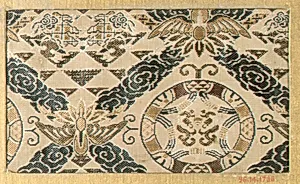
This exquisite silk textile fragment, titled simply *Piece*, hails from Japan during the 18th–19th, a time when the country’s Edo and early Meiji periods flourished with masterful craftsmanship. Measuring just 3¼ x 5½ inches, this small woven treasure likely served as part of a larger garment, such as a kimono or obi, or perhaps a decorative sample showcasing the weaver’s skill. Donated to the Metropolitan Museum of Art 1896 by collectors Mr. and Mrs. H. O. Havemeyer, it reflects the growing Western fascination with Japanese art during the late 19th century. Woven silk was a pinnacle of Japanese textile artistry, prized for its luxurious sheen, durability, and capacity for intricate patterns. Artisans employed sophisticated loom techniques, often incorporating motifs inspired by nature, seasons, or daily life—hallmarks of Japan’s aesthetic harmony. Silk production, centered in regions like Kyoto and Nishijin, was not only an economic powerhouse but also a cultural emblem of refinement and status, blending utility with profound beauty. Though the artist remains unknown, this piece embodies the anonymous genius of Japan’s textile guilds, where collective mastery elevated everyday fabrics to art. Visitors, imagine the delicate hands guiding shuttles to create such finery— a testament to enduring tradition.