
Piece
Unknown Artist
18th century
Medium
Silk
Dimensions
6 x 4 1/2 in. (15.24 x 11.43 cm)
Classification
Textiles-Woven
Culture & Period
Japan · Edo period (1615–1868)
Department
Asian Art
Museum
Metropolitan Museum of Art, New York, NY
Credit
Gift of Mr. and Mrs. H. O. Havemeyer, 1896
Accession Number
96.14.1844
Rights
Public Domain
Tags
Art Historical Context
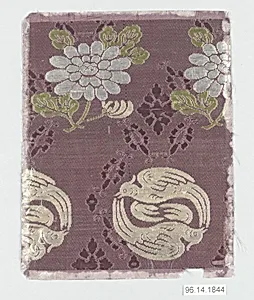
This delicate silk textile fragment, titled simply *Piece*, hails from 18th-century Japan during the Edo period (161–1868), a time of relative peace and cultural flourishing under the Tokugawa shogunate. Measuring just 6 x 4½ inches (15.24 x 11.43 cm), it exemplifies the exquisite woven textiles produced in workshops across Japan, where silk was prized for its luster and versatility in garments like kimonos. The motif of birds—evident from its tagging—likely draws from nature-inspired designs common in Japanese art, symbolizing harmony, seasons, or poetic themes. Woven silk techniques during the Edo era reached remarkable sophistication, with artisans employing complex looms to create intricate patterns in a single fabric. These pieces were not only functional but also status symbols, reflecting the rising merchant class's appreciation for refined craftsmanship amid urban prosperity in cities like Kyoto and Edo (modern Tokyo). Though the artist remains unknown, such textiles highlight Japan's mastery of textile arts, blending utility with aesthetic beauty. Generously gifted to the Metropolitan Museum of Art in 1896 by Mr. and Mrs. H. O. Havemeyer, this fragment offers visitors a tangible glimpse into Edo Japan's artistic legacy. Pause to admire its subtle sheen and imagine it as part of a larger garment, whispering stories of a vibrant era.