
Piece
Unknown Artist
18th–19th century
Medium
Silk
Dimensions
8 1/4 x 6 1/4 in. (20.95 x 15.88 cm)
Classification
Textiles-Woven
Culture
Japan
Department
Asian Art
Museum
Metropolitan Museum of Art, New York, NY
Credit
Gift of Mr. and Mrs. H. O. Havemeyer, 1896
Accession Number
96.14.1897
Rights
Public Domain
Tags
Art Historical Context
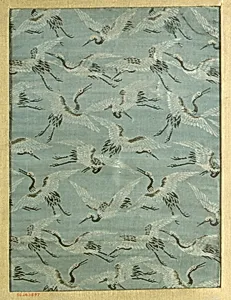
This exquisite silk textile fragment, crafted by an unknown Japanese artist during the 18th–19th, captures the elegance of Edo-period (1603–1868) and early Meiji-era weaving traditions. Measuring just 8¼ x 6¼ inches, it exemplifies the precision of Japanese kasuri (ikat) or tapestry weaving techniques, where silk threads are dyed and woven to create intricate patterns. The motif of cranes—graceful birds soaring amid stylized clouds—holds deep cultural resonance in Japan, symbolizing longevity, fidelity, and good fortune, often featured in celebratory textiles like kimono sashes or ceremonial robes. Silk production flourished in Japan during this era, with regions like Nishijin in Kyoto renowned for luxurious brocades that blended artistry with technical mastery. Such pieces were not merely decorative but carried auspicious meanings, gifted during weddings or festivals to invoke blessings. This small "Piece," acquired as a gift from collectors Mr. and Mrs. H. O. Havemeyer in 1896, reflects the growing Western fascination with Japanese art during the late 19th century. Now housed in the Metropolitan Museum of Art's Asian Art Department, it invites visitors to appreciate the delicate interplay of texture and symbolism in everyday luxury, a testament to Japan's enduring textile heritage.