
Piece
Unknown Artist
18th–19th century
Medium
Silk
Dimensions
2 1/4 x 2 1/4 in. (5.71 x 5.71 cm)
Classification
Textiles-Embroidered
Culture
Japan
Department
Asian Art
Museum
Metropolitan Museum of Art, New York, NY
Credit
Gift of Mr. and Mrs. H. O. Havemeyer, 1896
Accession Number
96.14.1919
Rights
Public Domain
Tags
Art Historical Context
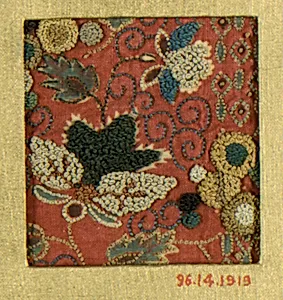
This delicate embroidered silk square, titled simply *Piece*, hails from Japan during the 18th–19th, a time when the nation’s Edo and early Meiji eras celebrated exquisite craftsmanship in textiles. Measuring just 2¼ x 2¼ inches, this tiny artwork exemplifies the precision of Japanese embroidery, likely featuring motifs of leaves that evoke the transient beauty of nature—a recurring theme in Japanese art symbolizing seasonal change and wabi-sabi impermanence. Crafted on luxurious silk, the medium was prized for its sheen and durability, often used in garments, accessories, or decorative patches. Embroiderers employed fine silk threads in intricate stitching techniques, such as satin or stem stitch, to create textured, lifelike depictions that could withstand daily wear. Though the artist remains unknown, such works highlight the anonymous mastery of artisan workshops, where skill was honed through generations. A generous gift to the Metropolitan Museum of Art from Mr. and Mrs. H. O. Havemeyer in 1896, this piece offers a window into Japan’s textile heritage, reminding us how even the smallest objects can encapsulate profound cultural elegance. Visitors, peer closely to appreciate its subtle artistry!