
Piece
Unknown Artist
19th century
Medium
Cotton
Dimensions
29 1/4 x 13 1/2 in. (74.30 x 34.29 cm)
Classification
Textiles-Painted and Printed
Culture
Japan
Department
Asian Art
Museum
Metropolitan Museum of Art, New York, NY
Credit
Seymour Fund, 1966
Accession Number
66.122.2
Rights
Public Domain
Art Historical Context
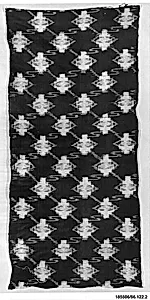
This exquisite cotton textile fragment, titled simply *Piece*, hails from 19th-century Japan and the artistry of the nation's vibrant textile tradition. Measuring ¼ x 13½ (74.3 x 34.3 cm), it belongs to the Metropolitan Museum of Art's Asian Art, acquired through the Seymour Fund in 6. Classified as a painted and printed textile, showcases the meticulous craftsmanship typical of Japanese fabric production during the Edo (1603–1868) or early Meiji (1868–1912) periods, when cotton became increasingly accessible for both everyday garments and decorative panels. Japanese textile techniques like stencil printing (katazome) or hand-painting with resists allowed artisans—often anonymous workshops—to create intricate patterns that blended functionality with aesthetic beauty. Cotton's affordability and durability made it ideal for kimono linings, banners, or noren shop curtains, reflecting Japan's sophisticated approach to design where motifs drew from nature, folklore, and daily life. Though the specific imagery remains unrecorded here, such pieces highlight the era's innovation in colorfast dyes and precise application methods. In the museum context, this unassuming "piece" invites visitors to appreciate the unsung heroes of Japanese art: skilled dyers and printers whose work preserved cultural narratives. Its presence in the Met underscores the global fascination with Edo-Meiji textiles, bridging personal craft with enduring historical legacy.