
Piece
Unknown Artist
Medium
Cotton, bast fiber, silk
Dimensions
4 x 12 1/2 in. (10.16 x 31.75 cm)
Classification
Textiles-Painted and Printed
Culture & Period
Japan · Meiji (1868–1912) or Taishō (1912–26) period
Department
Asian Art
Museum
Metropolitan Museum of Art, New York, NY
Credit
Gift of Amanda Stinchecum, 1982
Accession Number
1982.385.1
Rights
Public Domain
Tags
Art Historical Context
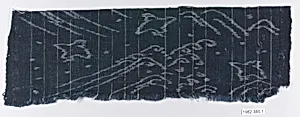
This delicate textile fragment, simply titled *Piece*, hails from Japan during the Meiji (8–1912) or Taishō (1912–1926) periods, a transformative era when the nation blended traditional craftsmanship with Western influences amid rapid modernization. Measuring just 4 x 12½ inches, it is crafted from cotton, bast fiber ( as ramie or hemp and silk, and classified as a painted and printed textile. Likely a remnant of clothing, a sample, or decorative fabric, its small scale invites close inspection, revealing the exquisite artistry of anonymous makers in the Asian Art tradition. Birds, a recurring motif tagged here, hold deep cultural resonance in Japanese art, often symbolizing freedom, longevity, and the seasons. During Meiji and Taishō, textile techniques like stenciling (katazome) or hand-painting flourished, producing vibrant patterns for kimonos and furnishings that reflected both everyday life and aesthetic refinement. This piece exemplifies the ingenuity of these methods, where natural fibers were dyed and printed to create enduring, lightweight textiles suited to Japan's climate and customs. A generous gift to the Metropolitan Museum of Art from Amanda Stinchecum in 1982, it offers a window into Japan's artistic evolution, bridging Edo-era traditions with modern innovation. Visitors will appreciate its subtle beauty up close, a testament to the skill of unsung artisans.