
Piece
Unknown Artist
18th century
Medium
Silk / Compound weave
Dimensions
8 5/8 × 2 in. (21.9 × 5.1 cm)
Classification
Textiles-Woven
Culture & Period
Japan · Edo period (1615–1868)
Department
Asian Art
Museum
Metropolitan Museum of Art, New York, NY
Credit
Gift of Kihei Hattori, in memory of his father, Kihei Hattori, 1920
Accession Number
20.148.276
Rights
Public Domain
Art Historical Context
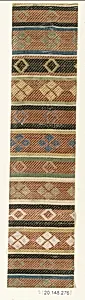
This delicate silk fragment, woven in a compound technique during Japan's Edo period (1615–8), exemplifies the era's mastery of textile artistry. Measuring just 8⅝ × 2 inches, this narrow piece likely originated from a garment sash, accessory, or decorative band, showcasing the precision of 18th-century weavers. The compound weave sophisticated method using multiple warp and weft sets—allowed for intricate, multi-layered patterns in a single cloth, a hallmark of luxury production in urban centers like Kyoto and Nishijin. In the prosperous Edo period, textiles were a canvas for cultural expression, reflecting social status and seasonal motifs amid peace and economic growth. Silk weaving flourished under merchant patronage, blending functionality with aesthetic refinement; such pieces adorned kimonos and obi for samurai, geisha, and affluent townsfolk. This artifact highlights Japan's enduring textile heritage, where technical innovation met artistic elegance. Generously gifted to the Metropolitan Museum of Art in 1920 by Kihei Hattori in memory of his father, it invites visitors to ponder the hands that crafted it centuries ago, preserving a slice of Edo Japan's vibrant material world.