
Piece
Unknown Artist
18th century
Medium
Silk / Compound weave
Dimensions
4 1/2 × 5 1/4 in. (11.4 × 13.3 cm)
Classification
Textiles-Woven
Culture & Period
China · Qing dynasty (1644–1911)
Department
Asian Art
Museum
Metropolitan Museum of Art, New York, NY
Credit
Gift of Kihei Hattori, in memory of his father, Kihei Hattori, 1920
Accession Number
20.148.420
Rights
Public Domain
Tags
Art Historical Context
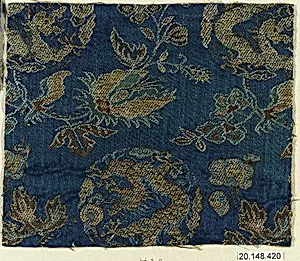
This exquisite silk textile fragment, woven in the 18th century during China's Qing dynasty (16441911), showcases the era's masterful craftsmanship in woven textiles. Measuring just 4½ × 5¼ inches, this small "Piece" likely served as a sample or part of a larger garment, furnishing, or ceremonial object, reflecting the opulence of imperial and elite Chinese culture. Donated to the Metropolitan Museum of Art 1920, it hails from the Asian Art collection and exemplifies the compound weave technique—a complex method where multiple warp and weft threads interlace to create intricate, multi-layered patterns in vibrant colors without additional embroidery. The design bursts with symbolic motifs: majestic dragons, symbolizing power, good fortune, and imperial authority; delicate flowers evoking prosperity and beauty; and flowing leaves representing growth and harmony. These elements were hallmarks of Qing textile art, often reserved for robes, hangings, or screens worn or displayed by the nobility. The silk medium, prized for its luster and durability, allowed weavers to achieve a rich, shimmering effect that captured light beautifully. In the Qing period, such textiles represented technological and artistic peaks, blending functionality with profound cultural symbolism. Visitors can appreciate how this modest fragment whispers of grand imperial workshops, where skilled artisans wove dreams of eternity into silk.