
Piece
Unknown Artist
18th century
Medium
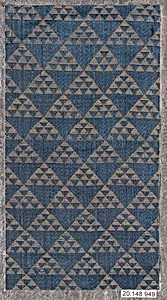
Silk / Compound weave
Dimensions
6 5/8 × 3 5/8 in. (16.8 × 9.2 cm)
Classification
Textiles-Woven
Culture & Period
Japan · Edo period (1615–1868)
Department
Asian Art
Museum
Metropolitan Museum of Art, New York, NY
Credit
Gift of Kihei Hattori, in memory of his father, Kihei Hattori, 1920
Accession Number
20.148.949
Rights
Public Domain
Art Historical Context
This exquisite silk textile fragment, woven in the 18th century Japan's Edo period (16151868), offers a glimpse into the refined artistry of the era. Measuring just 6⅝ × 3⅝ inches, this small "Piece" exemplifies the meticulous craftsmanship of Japanese weavers, who produced luxurious fabrics for kimonos, obi sashes, and ceremonial garments. The Edo period was a time of relative peace and economic prosperity, fostering vibrant textile production centers like Kyoto's Nishijin district, where silk weaving reached extraordinary heights of complexity and beauty. The medium—silk with compound weave—is particularly noteworthy. This advanced technique involves multiple sets of warps and wefts, allowing for intricate patterns and textures in a single loom process, often creating the illusion of embroidery or brocade. Such fabrics were status symbols, adorning the elite and reflecting Japan's deep appreciation for nature-inspired motifs and subtle elegance in everyday luxury. Generously gifted to the Metropolitan Museum of Art in 1920 by Kihei Hattori in memory of his father, this piece invites visitors to marvel at the anonymous genius behind Japan's textile legacy, where every thread tells a story of cultural sophistication.