
Piece
Unknown Artist
18th century
Medium
Silk / Compound weave
Dimensions
11 7/8 × 5 1/2 in. (30.2 × 14 cm)
Classification
Textiles-Woven
Culture & Period
Japan · Edo period (1615–1868)
Department
Asian Art
Museum
Metropolitan Museum of Art, New York, NY
Credit
Gift of Kihei Hattori, in memory of his father, Kihei Hattori, 1920
Accession Number
20.148.981
Rights
Public Domain
Tags
Art Historical Context
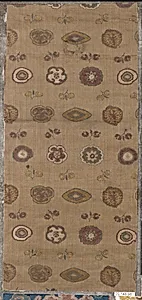
This exquisite silk textile fragment, titled simply *Piece*, hails from Japan's Edo period (1615–8), specifically the 18th century time of relative peace and prosperity that fueled vibrant artistic expression. Produced by an unknown artist, it exemplifies the era's mastery of woven textiles, often used in luxurious garments like kimonos or decorative screens. Measuring just 11⅞ × 5½ inches, this small yet intricate piece entered the Metropolitan Museum of Art's Asian Art collection in 192 as a gift from Kihei Hattori, honoring his father. Crafted in a compound weave technique—a sophisticated method where multiple layers of warp and weft create complex patterns in a single loom process—this silk artwork showcases the technical prowess of Edo-period weavers. Floral motifs, a hallmark tag here, likely bloom across its surface, reflecting Japan's deep reverence for nature's beauty and the seasonal ephemerality celebrated in art and poetry. Such textiles were status symbols among the growing merchant class, blending functionality with artistry. Today, this fragment invites us to appreciate the unsung labor behind Japan's textile heritage, where silk's luster and weave's precision captured fleeting elegance in enduring form. A window into everyday luxury from centuries past.