
Piece
Unknown Artist
19th century
Medium
Silk / Compound weave
Dimensions
5 1/4 × 7 3/4 in. (13.3 × 19.7 cm)
Classification
Textiles-Woven
Culture
Japan
Department
Asian Art
Museum
Metropolitan Museum of Art, New York, NY
Credit
Gift of Kihei Hattori, in memory of his father, Kihei Hattori, 1920
Accession Number
20.148.1050
Rights
Public Domain
Tags
Art Historical Context
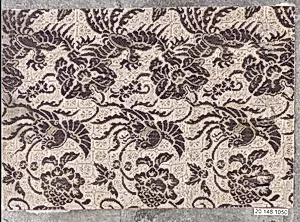
This exquisite silk textile fragment, titled simply *Piece*, hails from 19th-century Japan and showcases the refined artistry of woven textiles during the Meiji era. just 5¼ × 7¾ inches, its delicate scale belies the intricate beauty of birds and flowers rendered in vibrant patterns. These motifs—common in Japanese decorative arts—evoke nature's harmony, with birds symbolizing freedom and flowers representing seasonal beauty and renewal, themes deeply rooted in Japanese aesthetics. Crafted in a compound weave technique, the piece demonstrates advanced weaving mastery. Unlike simple weaves, compound structures interlace multiple sets of warp and weft yarns, enabling complex, multi-layered designs in a single cloth without supplementary wefts. This method, perfected by Japanese artisans, produced luxurious silks prized for kimono sashes (obi), ceremonial garments, or decorative panels, blending functionality with poetic expression. A generous gift to the Metropolitan Museum of Art in 1920 from Kihei Hattori in memory of his father, this anonymous work exemplifies Japan's enduring textile tradition. It invites visitors to appreciate how everyday craftsmanship carried profound cultural symbolism, bridging the personal and the poetic in Asian art.