
Pier table
1815–19
Medium
Rosewood veneer, gilded gesso, brass, white metal, marble, glass with mahogany, ash, white pine, yellow poplar
Dimensions
36 x 49 1/2 x 22 in. (91.4 x 125.7 x 55.9 cm)
Classification
Pier table
Culture
American
Department
The American Wing
Museum
Metropolitan Museum of Art, New York, NY
Credit
Rogers Fund, 1953
Accession Number
53.181a, b
Rights
Public Domain
Tags
Art Historical Context
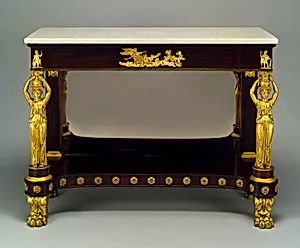
This elegant pier table, crafted by Charles-Honoré Lannuier between 1815 and 1819, exemplifies the refined neoclassical tastes that flourished in early nineteenth-century America. Born in France, Lannuier brought sophisticated European cabinetmaking traditions to New York, where he became one of the most celebrated furniture makers of his era. His work blended French Empire influences with American materials and sensibilities, creating pieces that graced the homes of the young nation’s elite. The table’s striking design features caryatids—classical female figures serving as supports—rendered in gilded gesso that catch the light dramatically. Its luxurious surface combines rosewood veneer with brass and white metal accents, while a marble top and mirrored back add depth and opulence. Such pier tables were typically placed between windows to maximize reflection and display, underscoring their role as both functional furniture and status symbols. Lannuier’s masterful use of diverse woods and metals highlights the technical prowess and international exchange that defined American decorative arts during this period. Today, this piece in the Metropolitan Museum’s American Wing offers visitors a tangible connection to the elegance and ambition of the Federal era.