
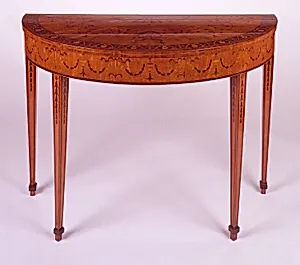
Pier tables
ca. 1785
Classification
furniture
Department
Smithsonian Collection
Museum
Smithsonian American Art Museum
Credit
Gift of Neil Sellin
Accession Number
1967-87-1-a,b
Rights
Public Domain
About this artwork
Research in Progress
Art Historical Context
Step into the elegant world of 18th-century interiors with these *Pier Tables* crafted by William Moore, an Irish furniture who died in 1814. Dated around 1785, these pieces exemplify the refined craftsmanship of late Georgian Ireland, a period when neoclassical influences from Britain and the Continent shaped domestic design. Moore, active in Dublin's thriving cabinetmaking scene, contributed to the export high-quality furniture that graced homes across Europe and America. Pier tables, typically slender console tables placed between windows (or "piers") in grand reception rooms, served both practical and decorative purposes. Often topped with marble slabs and paired with mirrors, they displayed fine china, silver, or curiosities, enhancing the symmetry and opulence of period parlors. Though the exact medium awaits further research, such tables were usually constructed from mahogany or satinwood, inlaid with brass or employing intricate veneering techniques that highlighted the wood's grain and the maker's skill. Now part of the Smithsonian American Art Museum's collection through the generous gift of Neil Sellin, these tables offer a window into Anglo-Irish prosperity before the 1801 Act of Union. As research progresses, they invite us to appreciate the artistry of everyday luxury, blending utility with understated grandeur.