
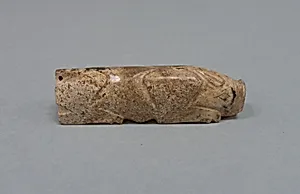
東漢 玉握豬|Pig in Recumbent Position
Unknown Artist
1st–2nd century
Medium
Jade (nephrite)
Dimensions
H. 1 1/4 in. (3.2 cm); L. 4 1/4 in. (10.8 cm)
Classification
Jade
Culture & Period
China · Eastern Han dynasty (25–220)
Department
Asian Art
Museum
Metropolitan Museum of Art, New York, NY
Credit
Gift of George Coe Graves, 1930
Accession Number
30.120.128
Rights
Public Domain
Tags
Art Historical Context
This exquisite jade pig, carved from nephrite during China's Eastern Han dynasty (25–220 CE), captures a recumbent figure in serene repose, measuring just 1¼ inches high and 4¼ inches long. Nephrite jade, prized for its toughness and luminous translucency, was a material of imperial prestige in ancient China, often reserved for ritual objects and elite burials. The unknown artisan's skill shines in the subtle modeling of the pig's plump form, curly tail, and alert ears, achieved through precise incision and polishing techniques that highlight the stone's natural veining. Pigs held practical and symbolic importance in Han society, as vital sources of food, labor, and wealth in agrarian life—evident in tomb art where such carvings served as offerings to ensure prosperity in the afterlife. This piece exemplifies the dynasty's mastery of jade carving, blending naturalistic detail with ritual function during a golden age of artistic refinement. A gift to the Metropolitan Museum of Art in 1930 from George Coe Graves, it invites visitors to ponder the enduring cultural reverence for jade and the humble pig in imperial China.