
Pilgrim Vase
ca. 1880–89
Medium
Painted and glazed earthenware
Dimensions
9 13/16 x 8 1/2 x 3 1/2 in. (24.9 x 21.6 x 8.9 cm)
Classification
Pilgrim vase
Culture
American
Department
The American Wing
Museum
Metropolitan Museum of Art, New York, NY
Credit
Friends of the American Wing Fund, 1985
Accession Number
1985.144.2
Rights
Public Domain
Tags
Art Historical Context
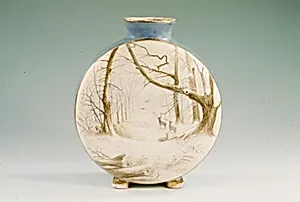
The *Pilgrim Vase*, by Jersey City Pottery around 1880–89, exemplifies the vibrant world of late 19th-century American ceramics. Produced by this New Jersey-based firm during a period when U.S. potters were embracing artistic expression amid industrialization, the vase is crafted from earthenware—a durable, affordable clay body fired at lower temperatures than porcelain. Its painted and glazed surface features motifs of animals and landscapes, the era's fascination with nature-inspired decoration, likely rendered in underglaze colors before a glossy glaze was applied for protection and sheen. Measuring just under 10 inches tall, this petite yet striking piece (9 13/16 x 8 1/2 x 3 1/2 in.) reflects the Aesthetic Movement's influence, where beauty in everyday objects was prized. Jersey City Pottery specialized in such hand-decorated wares, bridging utilitarian pottery with fine art. Housed in The Metropolitan Museum of Art's American Wing, it highlights America's growing ceramic industry and cultural pride in domestic craftsmanship. Acquired through the Friends of the American Wing Fund in 1985, the vase invites visitors to appreciate how painted earthenware allowed for vivid storytelling—here, through lively animals amid scenic landscapes—turning a simple vessel into a window on Victorian-era American life.