
Pillow cover
Unknown Artist
18th century
Medium
Silk on linen
Dimensions
L. 20 1/4 x W. 14 3/4 inches (51.4 x 37.5 cm)
Classification
Textiles-Embroidered
Culture
Greek, Crete
Department
European Sculpture and Decorative Arts
Museum
Metropolitan Museum of Art, New York, NY
Credit
Bequest of Richard B. Seager, 1926
Accession Number
26.31.415
Rights
Public Domain
Tags
Art Historical Context
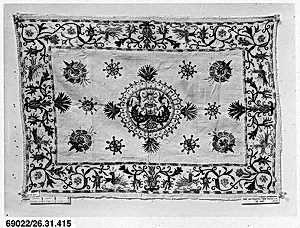
This exquisite 18th-century pillow cover from Crete, Greece, exemplifies the island's rich tradition of embroidered textiles. Crafted with silk threads on a linen ground, the piece measures 20¼ x 14¾ inches and features intricate motifs of human figures and flowers, as seen in its delicate stitching. Now housed in the Metropolitan Museum of Art's Department of European Sculpture and Decor Arts—thanks to the 1926 bequest of Richard B. Seager invites us to appreciate the artistry hidden in everyday objects. Embroidered textiles this were prized household items in Cretan culture, blending functionality with ornamental beauty. The unknown artist's skilled needlework highlights techniques such as fine satin and chain stitches, common in Mediterranean embroidery, which allowed for vibrant, narrative designs. These motifs of figures amid floral abundance likely drew from local folklore or nature, reflecting Crete's vibrant Ottoman-era heritage while preserving Greek Orthodox influences. As a window into 18th-century domestic life, this pillow cover underscores the cultural importance of women's handiwork in Crete, where such pieces adorned beds and served as cherished heirlooms. Its preservation offers modern visitors a tactile connection to a bygone era of craftsmanship and creativity.