
Pin
Unknown Artist
ca. 8th–7th century BCE
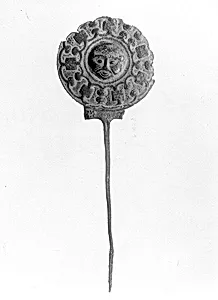
Medium
Bronze
Dimensions
10 7/16 × 3 11/16 in. (26.5 × 9.4 cm)
Classification
Metalwork-Ornaments
Culture & Period
Iran · Iron Age III
Department
Ancient Near Eastern Art
Museum
Metropolitan Museum of Art, New York, NY
Credit
Gift of Ernest Erickson Foundation, 1988
Accession Number
1988.102.8
Rights
Public Domain
Tags
Art Historical Context
This elegant bronze pin, crafted by an unknown artist in Iran the Iron Age III periodca. 8th–7th century BCE), a glimpse into the sophisticated metalworking traditions of the ancient Near East. Measuring 10½ inches long, this ornament likely served as a functional yet decorative fastening for clothing or hair, its slender form adorned with faces that evoke human or mythical figures. Such pins were prized possessions, blending utility with artistry in a time when bronze casting techniques were reaching new heights of precision. The pin's creation reflects the technological prowess of Iron Age Iranian cultures, where artisans mastered lost-wax casting or hammering to produce intricate details on durable alloys like bronze. This medium was ideal for personal adornments, symbolizing status and cultural identity amid the region's dynamic trade networks and emerging empires. The facial motifs, a common tag in ancient Near Eastern metalwork, may hint at protective amulets or stylized portraits, underscoring the era's blend of daily life and symbolic expression. Today, this rare artifact graces the Metropolitan Museum of Art's Department of Ancient Near Eastern Art, a gift from the Ernest Erickson Foundation in 1988. It invites us to ponder the lives of its long-ago owners, bridging millennia through exquisite craftsmanship.