
Pin
Unknown Artist
4th century BCE
Medium
bronze
Classification
Pin
Culture
European
Department
Costume Institute
Museum
Metropolitan Museum of Art, New York, NY
Credit
Gift of Mr. Ralph M. Chait, 1943
Accession Number
C.I.43.2.5
Rights
Public Domain
Art Historical Context
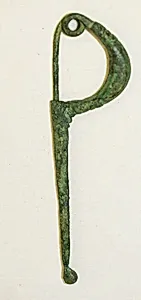
This elegant bronze pin, dating to the 4th century BCE, hails from ancient Europe and exemplifies the practical artistry of early Iron Age cultures. Crafted by an unknown artisan, it served as a functional accessory—likely for fastening cloaks, tunics, or hair—in everyday life and ceremonial dress. Its presence in the Metropolitan Museum of Art's Costume Institute highlights personal adornments reveal insights into ancient social customs, status, and craftsmanship. Bronze, an alloy of copper and tin, a prized medium in prehistoric Europe for its durability and workability. Artisans employed lost-wax casting or hammering techniques to shape such pins, often decorating them with simple motifs or swelling forms for both utility and subtle aesthetic appeal. This pin's survival underscores the resilience of bronze artifacts, which were widely traded and valued across tribal societies from the Hallstatt to emerging Celtic regions. Generously donated in 1943 by Mr. Ralph M. Chait, this unassuming yet evocative object invites us to imagine the hands that wore it millennia ago, bridging the gap between ancient wearers and modern admirers in the Met's vast collection.