
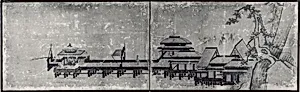
Pine Tree (obverse); Landscape (reverse)
17th century
Medium
Two-panel folding screen; ink, color, and gold on paper (obverse); ink and color on paper (reverse side)
Dimensions
22 x 73 1/2 in. (55.9 x 186.7 cm)
Classification
Paintings
Culture & Period
Japan · Edo period (1615–1868)
Department
Asian Art
Museum
Metropolitan Museum of Art, New York, NY
Credit
Fletcher Fund, 1925
Accession Number
25.215.53
Rights
Public Domain
Tags
Art Historical Context
This striking two-panel folding screen, created by an artist of the Kano School during Japan’s Edo period, exemplifies the refined decorative arts that flourished under the Tokugawa shogunate. The Kano School, long favored by samurai patrons, blended Chinese-inspired ink techniques with vibrant Japanese aesthetics, often employing gold leaf to evoke luminosity and grandeur in interior spaces. Here, the obverse presents a majestic pine tree rendered in ink, color, and gold on paper—a symbol of longevity and steadfastness—while the reverse offers a quieter landscape with buildings, inviting viewers to appreciate both sides depending on the screen’s placement. Folding screens like this one served practical as well as artistic purposes, dividing rooms in elite households while displaying seasonal or auspicious imagery. The dual-sided format is particularly noteworthy, allowing the work to function flexibly within traditional Japanese architecture. Measuring just over six feet wide, its intimate scale suggests it may have been designed for a study or tea room rather than a grand hall. As a product of the 17th century, the screen reflects the Kano School’s enduring influence during a time of political stability and cultural refinement, when such paintings bridged the worlds of nature, architecture, and human contemplation.