
Pines and Cherry Blossoms
probably 1814
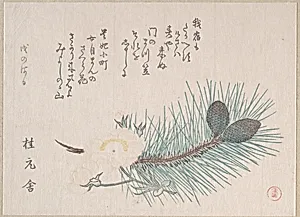
Medium
Part of an album of woodblock prints (surimono); ink and color on paper
Dimensions
5 1/8 x 7 in. (13 x 17.8 cm)
Classification
Prints
Culture
Japan
Department
Asian Art
Museum
Metropolitan Museum of Art, New York, NY
Credit
H. O. Havemeyer Collection, Bequest of Mrs. H. O. Havemeyer, 1929
Accession Number
JP2306
Rights
Public Domain
Tags
Art Historical Context
Nestled within an exquisite album of woodblock prints as *surimono*, Kubo Shunman's *Pines and Cherryossoms* (probably 1814) captures poetic harmony of nature in miniature form. Measuring just 5 1/8 x 7 inches, this and color on paper print showcases the artist's mastery of ukiyo-e, the "pictures of the floating world" style popular in Edo-period Japan. Towering pines, symbols of longevity and resilience, frame delicate cherry blossoms, evoking the transient beauty of spring—a core theme in Japanese aesthetics. Surimono like this one were privately commissioned luxury prints, often for New Year's greetings or poetry gatherings among literati. Shunman, a versatile artist-poet active in the early 19th century, elevated the format with refined woodblock techniques, layering vibrant colors and subtle textures to create intimate, jewel-like works. Unlike mass-produced ukiyo-e, these were artisanal treasures, blending visual art with haiku inscriptions (though not visible here). Housed in the Metropolitan Museum of Art's H. O. Havemeyer Collection, this piece reflects Japan's cultural reverence for seasonal motifs, reminding viewers of nature's enduring cycles amid life's ephemerality. A perfect gem for contemplating wabi-sabi elegance!
About the Artist
Kubo Shunman · 1757–1820
Japanese, 1757–1820