
Pipe
Unknown Artist
11th–12th century(?)
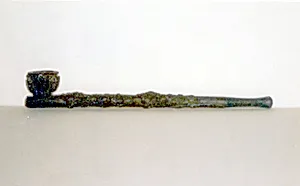
Medium
Silver
Dimensions
L. 8 in. (20.3 cm)
Classification
Metalwork
Culture
Nepal (Kathmandu Valley)
Department
Asian Art
Museum
Metropolitan Museum of Art, New York, NY
Credit
Samuel Eilenberg Collection, Gift of Samuel Eilenberg, 1987
Accession Number
1987.142.333a, b
Rights
Public Domain
Art Historical Context
This elegant silver pipe, hailing from Nepal's Kathmandu Valley and attributed to the 11th–12th century, offers a glimpse into the region's masterful metalworking traditions. Measuring 8 inches (20.3 cm) in length, it the exquisite craftsmanship of Newar artisans, who were renowned for their skill in shaping precious metals into functional yet ornate objects. Silver, a material symbolizing purity and status, was often reserved for items of daily or ritual use among the valley's Buddhist and Hindu communities. In the medieval Kathmandu Valley—a vibrant hub of trade, religion, and art—this pipe likely served practical purposes, perhaps for smoking local herbs or in ceremonial contexts. Its creation reflects the era's technical prowess, including hammering, chasing, and possibly repoussé techniques to achieve smooth, durable forms. Such metalwork bridged utility and aesthetics, mirroring the valley's fusion of Indian influences with distinctly Himalayan styles. Part of the Samuel Eilenberg Collection and gifted to the Metropolitan Museum of Art in 1987, this anonymous treasure invites us to ponder the lives of its ancient users, evoking the aromatic haze of bygone rituals in one of Asia's most culturally rich landscapes.