
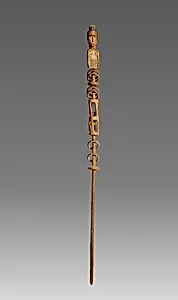
Pipe Tamper with rattling elements
Unknown Artist
1875–1889
Medium
Wood
Dimensions
L. 28 7/16 in. (72.2 cm)
Classification
Idiophone-Shaken-rattle
Culture
Native American (Northern Plains)
Department
Musical Instruments
Museum
Metropolitan Museum of Art, New York, NY
Credit
The Crosby Brown Collection of Musical Instruments, 1889
Accession Number
89.4.601
Rights
Public Domain
Art Historical Context
This intriguing wooden pipe tamper, crafted by an unknown Northern Plains Native American artist between 187 and 1889, an impressive 28 716 inches in length. Far more than a simple tool for packing tobacco into a pipe, it doubles as a shaken idiophone rattle, producing rhythmic sounds from its embedded rattling elements. Housed in the Metropolitan Museum of Art's Instruments department as part of the Crosby Brown Collection, this multifunctional object showcases the ingenuity of Plains Indian craftsmanship. In Northern Plains cultures—such as those of the Lakota, Cheyenne, or Blackfeet—such items blended everyday utility with ceremonial or social purposes. Pipes held deep spiritual significance in rituals, peace negotiations, and daily life, and a tamper like this could accompany songs, dances, or storytelling with its percussive rattle. The wood medium, likely sourced from local trees, reflects sustainable resource use and skilled carving techniques honed over generations. Today, this artifact highlights the rich sonic traditions of Native American peoples during a transformative late-19th-century era, preserving a tangible link to their vibrant material world. Visitors are invited to imagine its lively clatter echoing across the vast Plains.