
Pitcher
1849–54
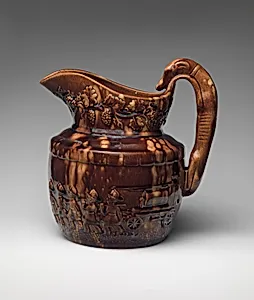
Medium
Mottled brown earthenware
Dimensions
H. 9 1/2 in. (24.1 cm)
Classification
Pitcher
Culture
American
Department
The American Wing
Museum
Metropolitan Museum of Art, New York, NY
Credit
Rogers Fund, 1913
Accession Number
13.31.4
Rights
Public Domain
Tags
Art Historical Context
This charming earthenware pitcher, crafted by Congress Pottery between 1849 and 1854, exemplifies mid-19th-century American utilitarian art. Standing at 9½ inches tall, its mottled brown glaze—characteristic of the era's Rockingham-style pottery—creates a textured, earthy surface that was both durable and decorative. Produced during a time when American potteries were gaining independence from European imports, such pieces were staples in households, blending functionality with modest ornamentation. The pitcher's motifs, featuring grapes and male figures (likely molded in relief), evoke abundance and perhaps rural life or classical themes popular in folk pottery. Grapes symbolize prosperity and the vine's resilience, while the men might represent laborers or allegorical figures, adding a narrative touch to everyday objects. As part of The American Wing at The Metropolitan Museum of Art (acquired via the Rogers Fund in 1913), it highlights the ingenuity of regional potters like those at Congress, who elevated common wares into cultural artifacts. Today, this pitcher offers a window into antebellum America's domestic world, where art met practicality in the hands of skilled artisans.