
Pitcher
Medium
Parian porcelain
Dimensions
9 x 7 x 5 3/4 in. (22.9 x 17.8 x 14.6 cm)
Classification
Pitcher
Culture
American
Department
The American Wing
Museum
Metropolitan Museum of Art, New York, NY
Credit
Gift of Adelaide Warren, in memory of her mother, Lucy de Jarnett Penn Warren, 1984
Accession Number
1984.451
Rights
Public Domain
Tags
Art Historical Context
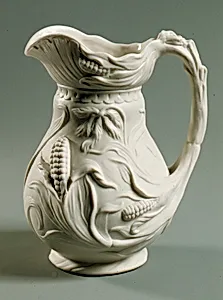
This elegant pitcher, crafted by United States Pottery Company between 1850 and 1858, showcases the refined artistry of mid-19th-century American ceramics. Made from Parian porcelain—a fine, unglazed material prized for its smooth, marble-like finish—the vessel measures just over nine inches tall and features decorative elements inspired by corn, reflecting the era’s appreciation for native agricultural motifs. Produced in Vermont, this piece exemplifies the company’s skill in molding intricate details that elevated everyday objects into works of art. During a time of growing national identity, American potteries like this one blended European techniques with distinctly local themes, creating items that appealed to middle-class households seeking both utility and beauty. Parian porcelain, popular in the Victorian period for its ability to capture delicate reliefs, allowed artisans to highlight the natural forms of corn husks and stalks with remarkable realism. Housed in the Metropolitan Museum’s American Wing, this pitcher stands as a charming testament to the ingenuity of early industrial design in the United States, gifted in memory of Lucy de Jarnett Penn Warren and now inviting visitors to appreciate the intersection of craft, culture, and everyday life in the 1850s.