
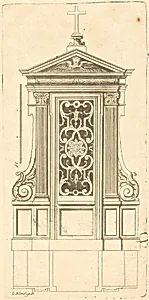
Plan et elevation des plus beaux confessionnaux de Paris, tres fidelemant mesure
published 1688
Medium
engraving
Classification
Department
CG-E
Museum
National Gallery of Art, Washington, D.C.
Credit
Rosenwald Collection
Accession Number
1944.5.175
Rights
Public Domain
Art Historical Context
In the opulent world of late 17th-century Paris, Jean Le Blond's *Plan et elevation des plus beauxnaux de Paris, treslemant mesure* (1688) offers a meticulous glimpse into the grandeur of Baroque ecclesiastical design. This engraving captures precise plans and elevations of the most splendid confessionals—elaborate wooden enclosures in churches where penitents confessed their sins. Published during the reign of Louis XIV, it reflects the era's fusion of religious devotion and artistic splendor, as Counter-Reformation ideals inspired richly carved structures adorned with twisted columns, putti, and floral motifs symbolizing redemption. Le Blond, a skilled French engraver, employed fine-line techniques to achieve remarkable fidelity, making these designs accessible for architects, woodworkers, and collectors across Europe. Engravings like this were revolutionary, democratizing architectural knowledge and preserving fragile wooden masterpieces that might otherwise be lost to time or reform. Housed in the National Gallery of Art's Rosenwald Collection (Department CG-E), this print not only showcases technical precision but also evokes the sensory drama of Parisian worship spaces, where ornate confessionals drew the faithful into intimate encounters with the divine. (198 words)